 TM
TM TM
TM
November 18, 2025. 11:20 AM UTC.
So there I was, mindlessly scrolling through Instagram reels at 2 AM (don't judge me, we all do it), when suddenly my feed got invaded. Not by another “Nadia or Wah shampy wah” meme, but by Cloudflare outage memes.
One meme. Two memes. Five memes. Eight memes. TEN MEMES.
That's when I knew—something BIG had broken on the internet.
You know that feeling when you see the same topic everywhere and your brain goes, "Okay, I NEED to know what happened"? Yeah, that's me. My curious nature is both a blessing and a curse. I can't just scroll past a trending topic without diving deep into the rabbit hole.
So naturally, at 2:30 AM, instead of sleeping like a normal person, I started my investigation.
My first thought? "Wait, didn't AWS just have a massive outage on Diwali (October 22, 2025)? Is this some kind of cloud provider popularity contest? Are they competing for 'Who Can Break the Internet Better'?"
Whenever I want to understand something complex, I follow a simple framework: WWHW
Who's involved?
What happened?
How did it happen?
Why did it happen?
Simple, right? So let's start from the beginning.
Okay, confession time: Before this outage, I had vaguely heard of Cloudflare but didn't really know what they did. I mean, I'd seen those "Checking your browser..." pages sometimes, but that was about it.
So I did what any self-respecting curious person does—I Googled it.
You know how we have traffic police on roads making sure everything runs smoothly? They stop drunk drivers, catch people jumping red lights, and generally keep chaos from breaking loose?
Cloudflare is basically that, but for the internet.
They're like the bouncer, bodyguard, and speed optimizer of the digital world, all rolled into one massive global network.
Here's what they do:
Protection: They block bad actors trying to attack websites. DDoS attacks? Blocked. Malicious bots? Stopped. Hackers trying to break in? Not today, Satan.
Speed: They cache your website content across 300+ data centers worldwide. Someone in Tokyo accessing a website hosted in Virginia? Cloudflare serves it from Tokyo servers. Lightning fast.
Scalability: They handle massive traffic spikes so your website doesn't crash when it goes viral (or when you're running a flash sale and everyone wants that 70% discount).
The scale? Cloudflare handles approximately 81 million HTTP requests per second on average. That's not a typo. 81 MILLION. Every. Single. Second.
They power roughly 20% of all websites globally. Discord, Shopify, Canva, Patreon—if you've used the internet today, you've probably interacted with Cloudflare without even knowing it.
So when Cloudflare goes down, it's not just one website that breaks—it's basically a fifth of the internet that collectively decides to take a nap.
During my research, I kept seeing "Bot Management" mentioned. So I had to understand: What exactly is a bot?
Bots are basically software programs that do tasks on behalf of humans. Think of them as digital employees who work 24/7 without complaining, taking breaks, or asking for a raise.
But here's the thing—just like humans, bots can be good or bad.
These are the bots that make the internet actually useful:
Search engine crawlers (Googlebot, Bingbot): These guys crawl websites to index them for search results. Without them, Google would be useless.
Monitoring bots: Checking if your website is up and running. The real MVPs when your site goes down at 3 AM.
Your own API clients: Apps making legitimate requests to fetch data.
Accessibility bots: Helping people with disabilities navigate websites.
Social media preview bots: When you paste a link and get that nice preview card? That's a bot fetching the data.
These are the troublemakers Cloudflare is fighting against:
DDoS attack bots: Sending millions of fake requests to overwhelm and crash websites. Digital terrorists, basically.
Scalper bots: Those jerks who buy all the concert tickets or PS5s in 0.5 seconds using automated scripts.
Credential stuffing bots: Testing millions of stolen username/password combinations to hack accounts.
Content scraper bots: Stealing your articles, images, and data without permission.
Click fraud bots: Clicking on ads to drain your advertising budget (and making someone rich in the process).
Spam bots: Flooding your contact forms with "CLICK HERE FOR CHEAP VIAGRA" messages.
The problem? Modern bad bots are getting really good at pretending to be humans. They mimic mouse movements, simulate realistic browsing patterns, and even solve CAPTCHAs (yes, seriously).
It's literally an arms race between bot creators and bot detectors. Every time Cloudflare gets better at catching bots, the bad guys level up their bots. Rinse and repeat.
This is where Cloudflare's Bot Management system comes in. For every single request that passes through their network, they analyze dozens of signals:
IP address reputation (Is this IP known for shady behavior?)
Browser fingerprint (What fonts do you have installed? Screen resolution? WebGL capabilities?)
Mouse movement patterns (Humans move erratically; bots move in straight lines)
Keystroke dynamics (How fast do you type? What's the rhythm?)
Request timing (Do you wait 0.000001 seconds between clicks? That's suspicious)
Previous behavior history (Have we seen this pattern before?)
All of this gets fed into a machine learning model that spits out a score from 0-100:
0-29: Definitely a bot
30-49: Probably a bot
50-79: Probably human
80-100: Definitely human
Website owners then set rules like "Block anything scoring below 30" or "Show a CAPTCHA to anything below 50."
This scoring happens in MILLISECONDS for 81 million requests per second.
Mind. Blown.
At this point, it's 3 AM, I've had two cups of coffee, and I'm deep in technical blog posts.
But I'm on a mission. I need to know: What actually broke?
The memes were hilarious, but they weren't telling me the technical details. Time to dig deeper.
And that's when I found Cloudflare's official postmortem blog post.
And oh boy, was it a ride.
The outage was triggered by a bug in generation logic for a Bot Management feature file.
Wait, what? A "feature file"? What's that?
More Googling. More coffee. It's 3:30 AM now.
Okay, let me explain config files because this is crucial to understanding how everything went sideways.
Think of a config file as a instruction manual for your software. It's a text file that contains settings and rules telling your application how to behave.
Analogy time: Imagine you're setting up a new phone. You have settings like:
Language: English
Brightness: 70%
Notifications: Enabled
Do Not Disturb: 11 PM - 7 AM
A config file is exactly that, but for software systems.
Simple config file example:
server: port: 8080 timeout: 30 seconds max_connections: 1000security: enable_firewall: true bot_score_threshold: 30 rate_limit: 100_requests_per_minutefeatures:
- ip_reputation
- browser_fingerprint
- mouse_movement_analysis
- keystroke_dynamics
Why use config files instead of hardcoding values?
Change settings without recompiling the entire application
Different configs for development, testing, and production
Easy rollbacks if something breaks (just revert to the old config)
Version control your settings (track who changed what and when)
In Cloudflare's case, they had a "feature file" that listed all the machine learning features used for bot scoring. This file would:
Get automatically generated every 5 minutes (to adapt to new bot attack patterns)
Get pushed to thousands of servers across 300+ data centers globally
Get loaded by the bot management module to score incoming traffic
Sounds great, right? Automatic updates to fight evolving threats?
Well, here's the problem nobody thought about:
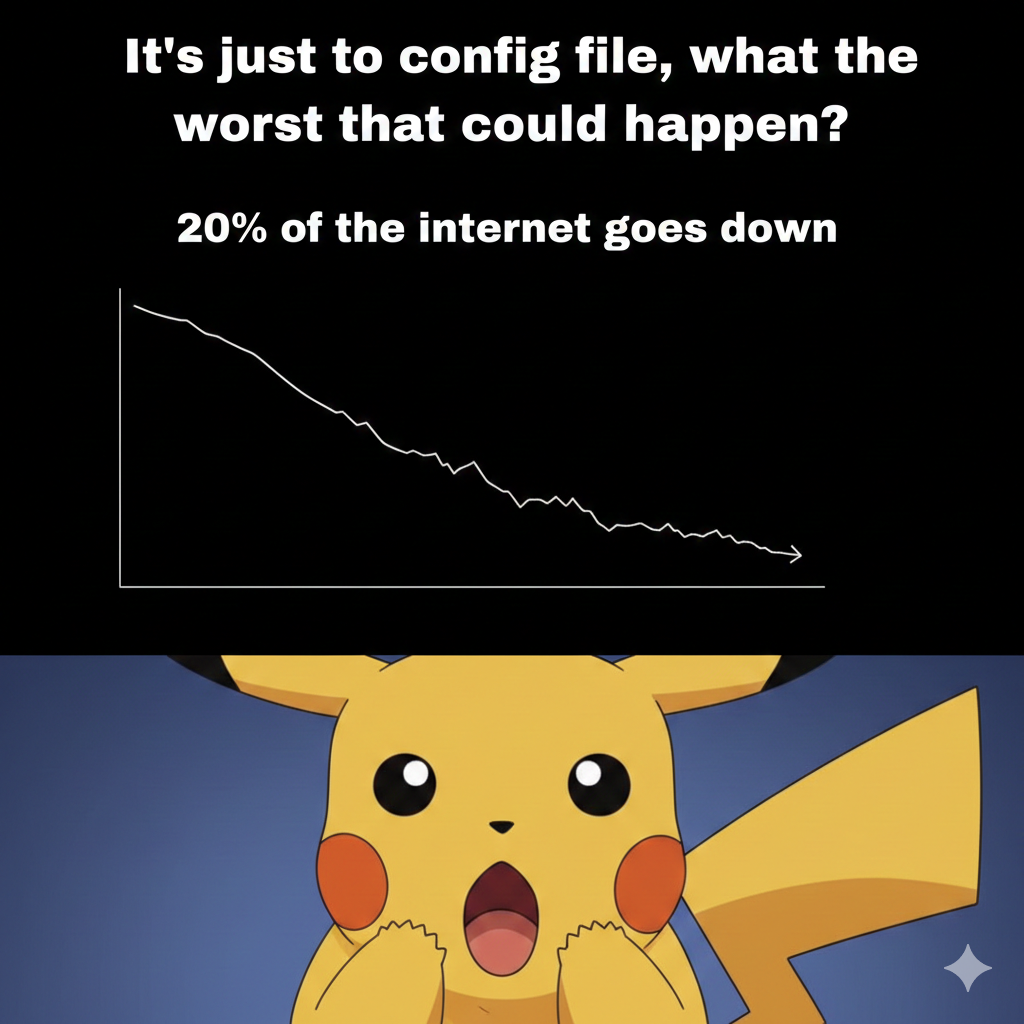
Config files are treated as "data," not "code." So they usually skip all the rigorous testing that actual code goes through. No unit tests. No staging validation. No gradual rollout with monitoring.
They just get... deployed. To production. Globally. All at once.
What could possibly go wrong?
Alright, now that we understand all the pieces, let me walk you through exactly what happened on November 18, 2025.
Grab some popcorn. This is going to be wild.
A database team at Cloudflare was doing some routine maintenance. They were improving security in their ClickHouse database by making access permissions more explicit.
Their intention: Better security, more fine-grained control, fewer security vulnerabilities.
Their thought process: "This is a small, safe change. Just making permissions more explicit. What could go wrong?"
The change was simple: Let users see metadata from underlying database tables they already had access to. Seems harmless, right?
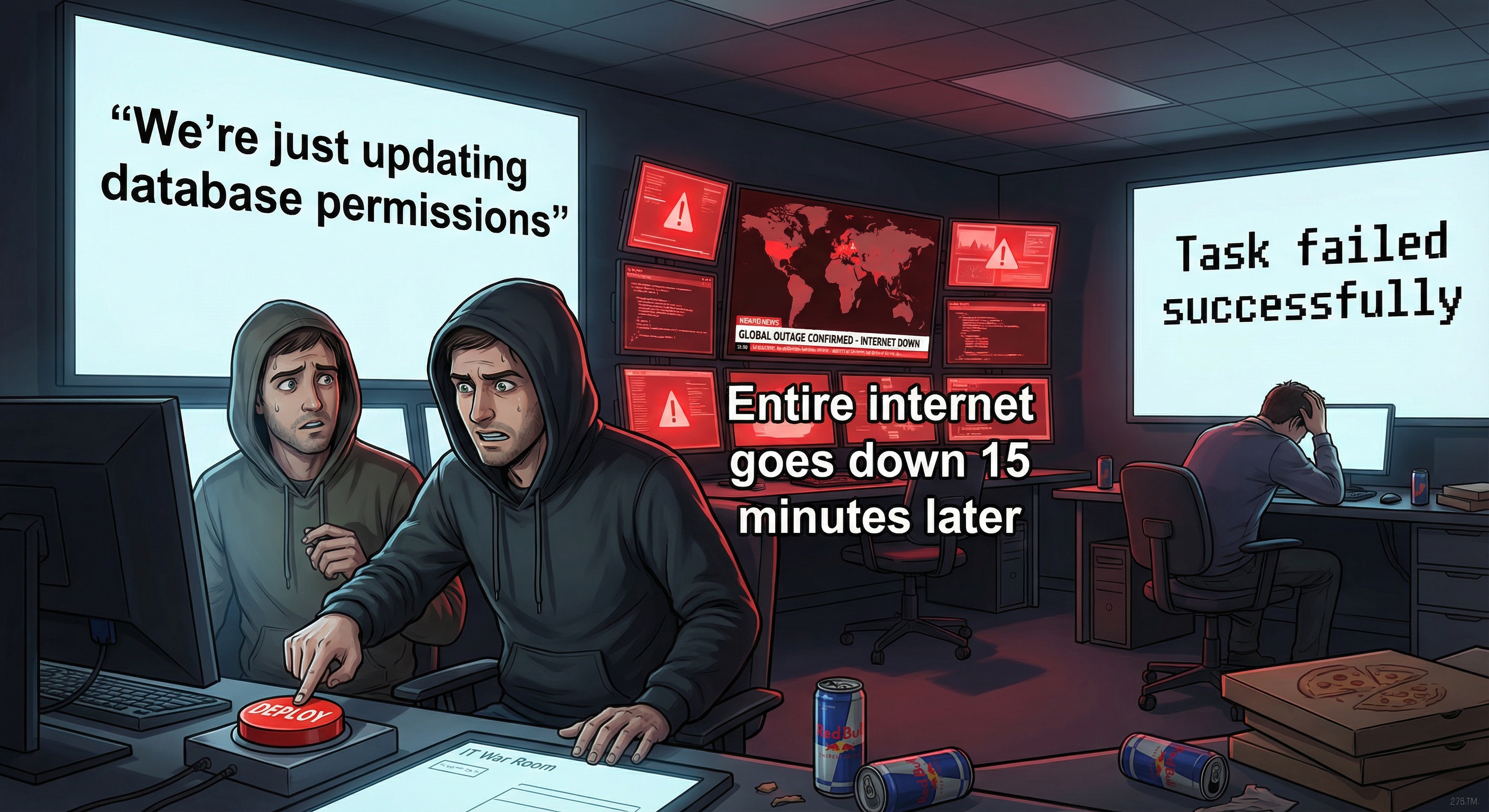
Narrator voice: It was not harmless.
Fifteen minutes after the database change, Cloudflare's monitoring systems start going haywire.
HTTP 500 errors start flooding in. Not just a few. Not hundreds. Millions per minute.
Users around the world start seeing this:
Error 500 - Internal Server Error
The server encountered an internal error and
was unable to complete your request.
Services affected:
ChatGPT (OpenAI)
X/Twitter (Elon Musk probably had a meltdown)
Discord (gamers worldwide in shambles)
Shopify (e-commerce crying)
Truth Social (even Trump's site went down, ironic)
Canva (designers panicking)
McDonald's self-service kiosks (YES, REALLY)

Someone actually posted a photo on Reddit of a McDonald's kiosk showing a Cloudflare error. You know it's bad when you can't even order a Big Mac.
Remember that feature file I mentioned? The one that gets auto-generated every 5 minutes?
Well, that database permission change? It had an unintended side effect.
The SQL query generating the feature file looked like this:
SELECT name, type
FROM system.columns
WHERE table = 'http_requests_features'
ORDER BY name;
Do you see the problem?
IT DOESN'T FILTER BY DATABASE NAME.
Before the permission change:
Query only had access to default database
Returned ~60 features
File size: Normal
After the permission change:
Query could now see BOTH default database AND r0 database
Returned ~60 features from default + ~60 features from r0
Total: 120+ features (duplicates from both databases)
File size: DOUBLED
The query was basically saying "Give me all columns from the http_requests_features table" without specifying "...but only from the default database."
So when permissions changed and suddenly the query could see two databases, it happily returned data from BOTH.
Classic developer mistake: Making implicit assumptions instead of being explicit.
The fix would have been trivial:
SELECT name, type FROM system.columns WHERE table = 'http_requests_features' AND database = 'default' -- ← THIS ONE LINE WOULD HAVE PREVENTED EVERYTHINGORDER BY name;One missing line. One missing AND clause.
That's all it took to break 20% of the internet.
Let that sink in.
Now here's where it gets even more interesting (and terrifying).
The oversized feature file (120+ features instead of 60) gets propagated across Cloudflare's global network. Thousands of servers download the new config and try to load it.
And then... PANIC. (Literally.)
Deep in Cloudflare's Rust code, there was this innocent-looking limit:
const MAX_FEATURES: usize = 200;When engineers wrote this code years ago, they thought:
"We're currently using ~60 features"
"Let's set the limit to 200 for a nice safety margin"
"3x our current usage! We'll NEVER hit that limit!"
Narrator voice: They hit that limit.
Currently that limit is set to 200, well above our current use of ~60 features.
This is what we call a LATENT BUG
A latent bug is code that's been sitting in production for YEARS, perfectly harmless, until specific conditions trigger it to explode like a landmine.
The limit was always there. The panic code was always there. It just never triggered... until November 18, 2025.
Here's what happened when the bot management module tried to load 120+ features:
const MAX_FEATURES: usize = 200;// Preallocate memory for performancelet mut features = Vec::with_capacity(MAX_FEATURES);for feature in feature_file.entries() { features.push(feature).unwrap(); // BOOM}The software had a limit on the size of the feature file that was below its doubled size. That caused the software to fail.
That .unwrap() call is the culprit. In Rust, unwrap() means: "I'm 100% certain this won't fail. If it does, PANIC and crash the thread."
When the feature count exceeded capacity, push() failed, unwrap() panicked, the thread crashed, and every request handled by that thread returned HTTP 500.
The actual panic message:
thread 'fl2_worker_thread' panicked at 'called Result::unwrap() on an Err value: CapacityExceeded'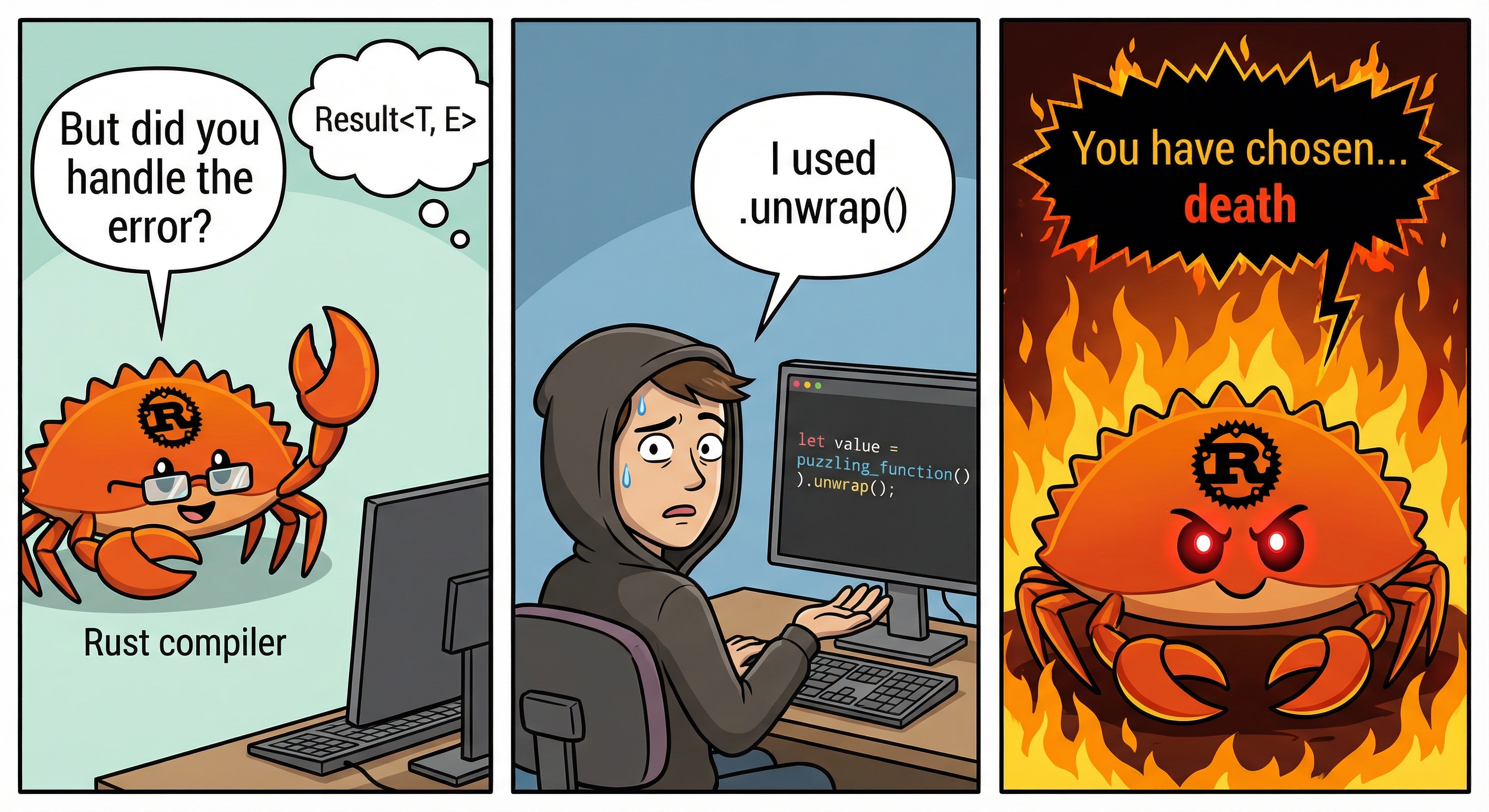
Now here's where the story gets really interesting and showcases why debugging production issues is SO HARD.
The system would fail for 5 minutes, recover, fail again, recover, fail again...
Every five minutes there was a chance of either a good or a bad set of configuration files being generated and rapidly propagated across the network.
Engineers watching the monitoring dashboards were losing their minds. Errors would spike, then drop to normal, then spike again like clockwork every 5 minutes.
This is NOT how internal bugs behave. This is how DDoS attacks behave.
Why the oscillation?
The ClickHouse database cluster had multiple nodes. The permission change was rolling out gradually across the cluster:
At 11:25:
Node 1: Updated with new permissions → Query returns duplicates → BAD FILE
Node 2: Not updated yet → Query returns clean data → GOOD FILE
Node 3: Updated → BAD FILE
Node 4: Not updated → GOOD FILE
Every 5 minutes, the feature file generation job runs. It hits a random ClickHouse node via load balancing.
Result:
11:20 - Hits Node 1 → Bad file → Internet breaks
11:25 - Hits Node 2 → Good file → Internet recovers
11:30 - Hits Node 3 → Bad file → Internet breaks
11:35 - Hits Node 4 → Good file → Internet recovers
(Repeat)
Eventually, all nodes got updated, and the failure stabilized in the "everything is broken" state.
Coincidence #1: The Status Page Went Down Too
At the exact same time Cloudflare's network started failing, their status page went down.
Plot twist: The status page is hosted completely outside Cloudflare on a third-party provider specifically to avoid this exact situation.
But to the incident response team frantically trying to fix things, it looked like:
Our network is failing
Our external status page is failing
Conclusion: "We're under a coordinated attack!"
They wasted precious minutes investigating an attack that didn't exist.
Coincidence #2: It Looked Like a DDoS Attack
Cloudflare had recently defended against some of the largest DDoS attacks in history—7.3 Tbps attacks.
The oscillating failure pattern, the traffic spikes, the global impact—everything screamed "massive DDoS attack."
Internal incident chat (probably):
11:35 - Engineer 1: "Are we seeing Aisuru attack patterns?"
11:42 - Engineer 2: "Traffic profile matches recent 15 Tbps attack"
11:48 - Engineer 3: "Status page down too, definitely coordinated"
12:05 - Engineer 4: "Wait, attack hypothesis not matching data..."
12:33 - Engineer 5: "Back to internal causes. Something's wrong with our code."
13:15 - Engineer 6: "Found it! Bot Management feature file!"

After 3 hours and 10 minutes of chaos, engineers finally:
Identified the root cause: Oversized feature file
Stopped automatic generation: No more new files being created
Manually deployed a known-good file: Reverted to the config from before 11:05
Force-restarted the core proxy: Fresh start with good config
Core traffic was largely flowing as normal by 14:30.
But it wasn't over yet. Services were coming back, but slowly. There was a massive backlog of failed requests, retry storms, and downstream systems struggling to catch up.
After 5 hours and 46 minutes, everything was finally back to normal.
Total damage:
Billions of failed requests
Hundreds of millions of dollars in lost revenue (e-commerce, SaaS, advertising)
Countless productivity hours lost
Infinite memes created
Alright, let me put on my serious hat for a moment. (It's 5 AM now, and I've had way too much coffee, but these lessons are important.)
That SQL query was missing ONE clause: AND database = 'default'
That's it. That's literally all it took.
Moral of the story: Always be explicit in your queries. Never rely on implicit behavior.
-- BAD: Assumes only one database is visible
SELECT * FROM users WHERE active = true;-- GOOD: Explicit about everything
SELECT id, name, email FROM production.users WHERE active = true AND deleted_at IS NULL AND database = 'production'LIMIT 1000;The limit is set to 200, well above our current use of ~60 features.
A 3x safety margin felt safe. Until it wasn't.
Pro tip: If you have hardcoded limits in your code, they WILL bite you eventually.
Better approach:
Make limits configurable
Add monitoring and alerts when approaching limits
Fail gracefully instead of panicking
// BAD: Hardcoded limit that panics
const MAX_FEATURES: usize = 200;features.push(feature).unwrap();// GOOD: Configurable limit with graceful degradation
let max_features = config.get("max_features").unwrap_or(500);if features.len() < max_features { features.push(feature);} else { log::warn!("Feature limit reached, truncating");}Config files are code. They affect behavior. But we don't test them like code.
What Cloudflare should have had:
def validate_feature_file(file): """Validate feature file before deployment""" # Size check if file.size > MAX_EXPECTED_SIZE: alert("Feature file size anomaly!") return False # Feature count check if file.num_features > MAX_FEATURES: alert("Too many features!") return False # Duplicate check if has_duplicates(file.features): alert("Duplicate features detected!") return False return TrueCloudflare pushed the config file to 100% of servers globally in minutes.
Bad idea.
Better idea: Canary deployment
stages = [1%, 5%, 25%, 50%, 100%]
for percentage in stages: deploy_to_percentage(percentage) wait(5_minutes) if error_rate_increased(): rollback() alert("Config caused errors!") returnThis incident shows how reliant some very important Internet based services are on a relatively few major players.
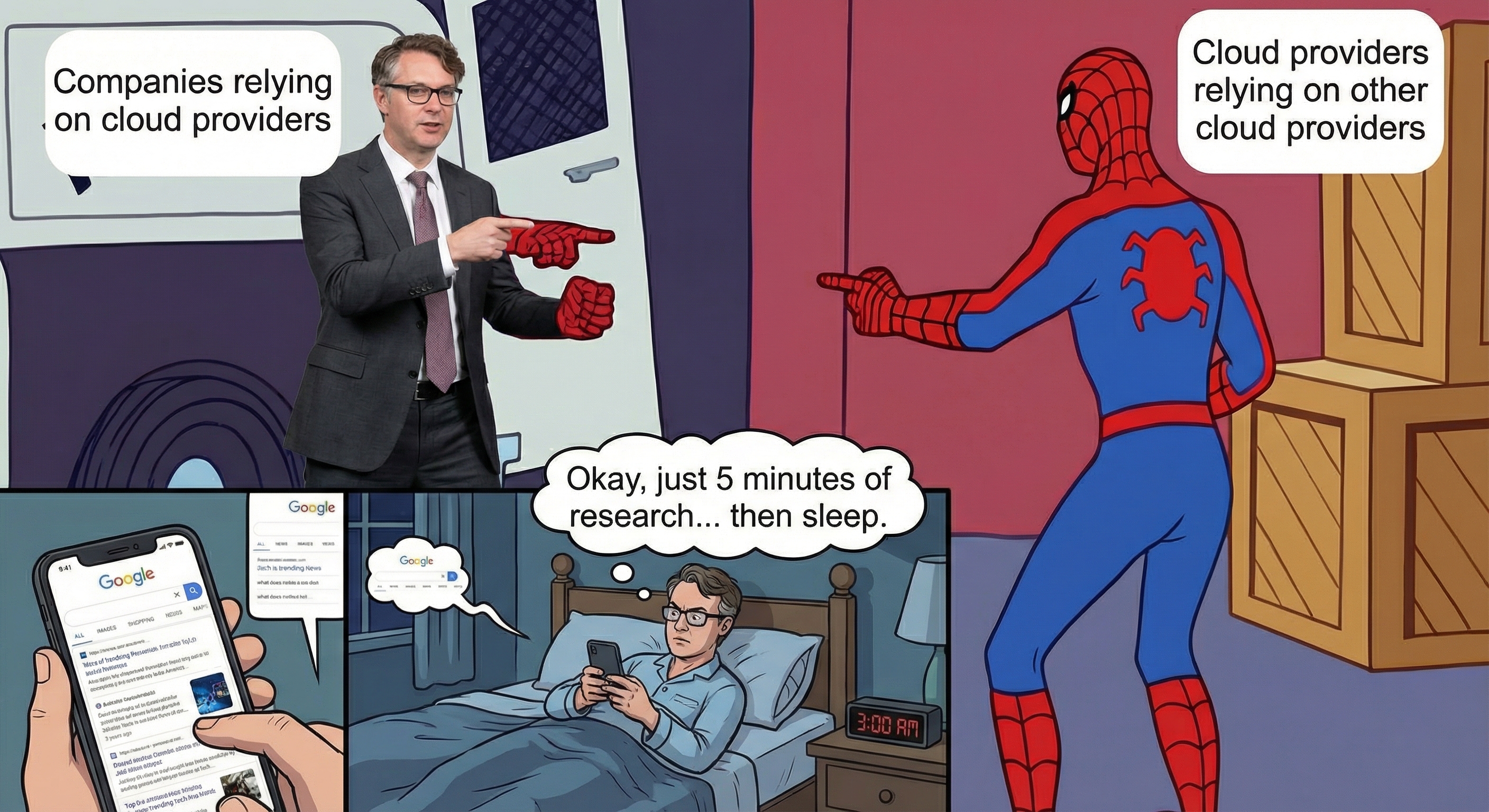
The three pillars holding up the internet:
AWS (compute/hosting)
Cloudflare (CDN/security)
Microsoft Azure (enterprise)
When one falls, millions of sites go dark.
But here's the thing: We centralize because it works.
Small companies can't afford to:
Run 300+ global data centers
Defend against 15 Tbps DDoS attacks
Hire 24/7 security teams
Achieve 99.99% uptime
So we rely on specialists. And sometimes, those specialists have a bad day.
Is that acceptable? I don't know. But it's the reality we live in.
Despite the severity, Cloudflare's response was actually exemplary.
CEO Matthew Prince said: "That there was a period of time where our network was not able to route traffic is deeply painful to every member of our team. We know we let you down today."
Within hours, they published:
Complete technical postmortem
Actual code snippets showing the bug
Timeline of events
Specific action items for prevention
Compare this to companies that:
Issue vague "we experienced technical difficulties" statements
Blame "third-party providers" without details
Never publish root cause analysis
Transparency builds trust. Even after a massive failure.
Conclusion: It's 6 AM and I've Learned Too Much
So here we are. It's 6 AM. I started this research journey at 2 AM after seeing memes on Instagram.
I've consumed an unhealthy amount of coffee. But I've learned something profound:
The internet doesn't break because of sophisticated cyber attacks.
It breaks because a SQL query forgot to add AND database = 'default'.
One missing clause. That's all it took.
And somewhere in YOUR codebase, right now, there's probably a latent bug waiting for the perfect conditions to wake up and cause chaos.
So here's my challenge to you:
Go search your codebase for:
Hardcoded limits (MAX_, LIMIT_, etc.)
SQL queries without explicit filters
.unwrap() or panic! in critical paths
Config files that aren't validated
Found something scary? Good. Fix it before it becomes a meme.
P.S. If you made it this far, congrats! You now know more about the Cloudflare outage than 99% of people who saw the memes.
P.P.S. I really need to sleep now. But first, let me check if there are any new memes...
What's your take? Have you ever had a "simple config change" turn into a disaster? Drop your war stories on reddit and tag Enqurious
And if you're interested, let me know what outage you want me to dissect next. The CrowdStrike one from July 2024 is calling my name...

Navigate Databricks Marketplace like a pro. Learn the 5 key criteria for choosing AI models that match your agents, LLMs, and text generation needs—without the trial-and-error.
Spark optimization isn't always complex; some tweaks have a huge impact. Inferring schemas forces Spark to scan your data twice, slowing ingestion and inflating cost. Explicit schemas avoid the extra pass and make pipelines faster and cheaper.

Cricket is no longer just a game of "gut feelings." This blog uncovers how hidden metrics like Expected Wickets and "Ghost" simulations are winning matches before the first ball. Dive into the high-stakes world where data science meets the 22 yards to redefine the sport.
I tested a simple hypothesis about image similarity - and watched it fail spectacularly when my algorithm said a "3" looks more like an "8" than another "3". The investigation revealed why pixel-by-pixel comparison is too brittle and what humans do effortlessly that machines must learn explicitly.
Passed the Databricks Gen AI Associate Certification with 56 questions in 90 minutes! Here's my honest experience, preparation strategy, time management tricks, and the exact resources that helped me succeed. Real insights for aspiring certificants.

A practical walkthrough of how I reduced heavy batch workloads using Change Data Feed (CDF) in Databricks. This blog shows how CDF helps process only updated records, cutting compute costs and boosting pipeline efficiency.

I dropped a table in Snowflake, then queried to verify it was gone. The system said it doesn't exist, but also showed it consuming 3.57 MB. That contradiction led me down a rabbit hole of metadata delays, missing commands, and hidden costs. Here's what I discovered.
The AI industry has a security problem: data scientists aren't trained in security, ML engineers are working with black-box models, and security pros don't understand GenAI. Learn about the frameworks and tools bridging this gap—from Llama Guard to Databricks' safety features.
Why DELETE isn’t enough under GDPR, and how Time Travel can make sensitive data reappear unless VACUUM is used correctly.

This blog shares my personal journey into Snowflake Gen AI, from early confusion to hands-on clarity. It offers practical study tips, common pitfalls, and guidance to help you prepare effectively and understand Snowflake’s evolving AI capabilities.

Discover the top 10 data pipeline tools every data engineer should know in 2025. From Airflow to Fivetran, learn how each tool powers modern data workflows, supports real-time analytics, and scales across cloud ecosystems.
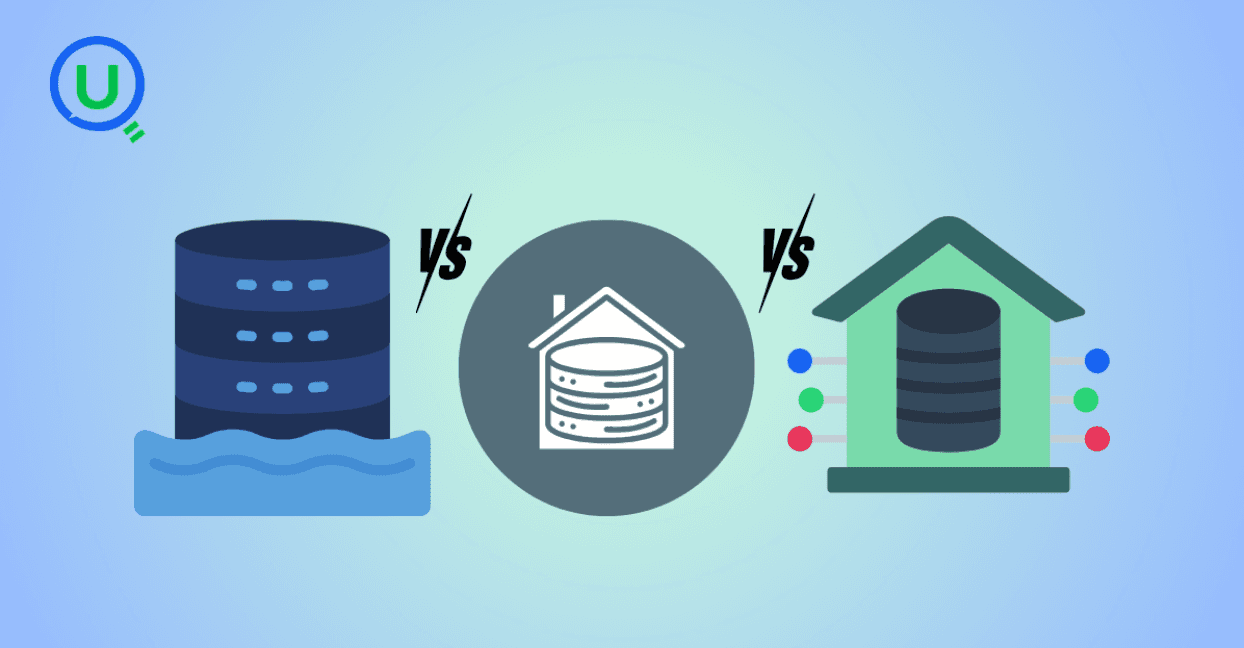
Confused between a data lake, data warehouse, and data mart? Discover key differences, real-world use cases, and when to use each architecture. Learn how to build a modern, layered data strategy for scalability, governance, and business insights.

Explore what syntax means in the world of data and AI—from SQL and Python to JSON and APIs. Learn why syntax matters, common errors, real-world examples, and essential best practices for data engineers, analysts, and AI developers in 2025.
Discover how AWS Data Pipeline helps automate data movement and transformation across AWS services like S3, Redshift, and EMR. Learn its key features, benefits, limitations, and how it compares to modern tools like AWS Glue and MWAA.

Learn how to build scalable and secure data pipeline architectures in 2024 with best practices, modern tools, and intelligent design. Explore key pillars like scalability, security, observability, and metadata tracking to create efficient and future-proof data workflows.
Explore the key differences between ETL and ELT data integration methods in this comprehensive guide. Learn when to choose each approach, their use cases, and how to implement them for efficient data pipelines, real-time analytics, and scalable solutions.
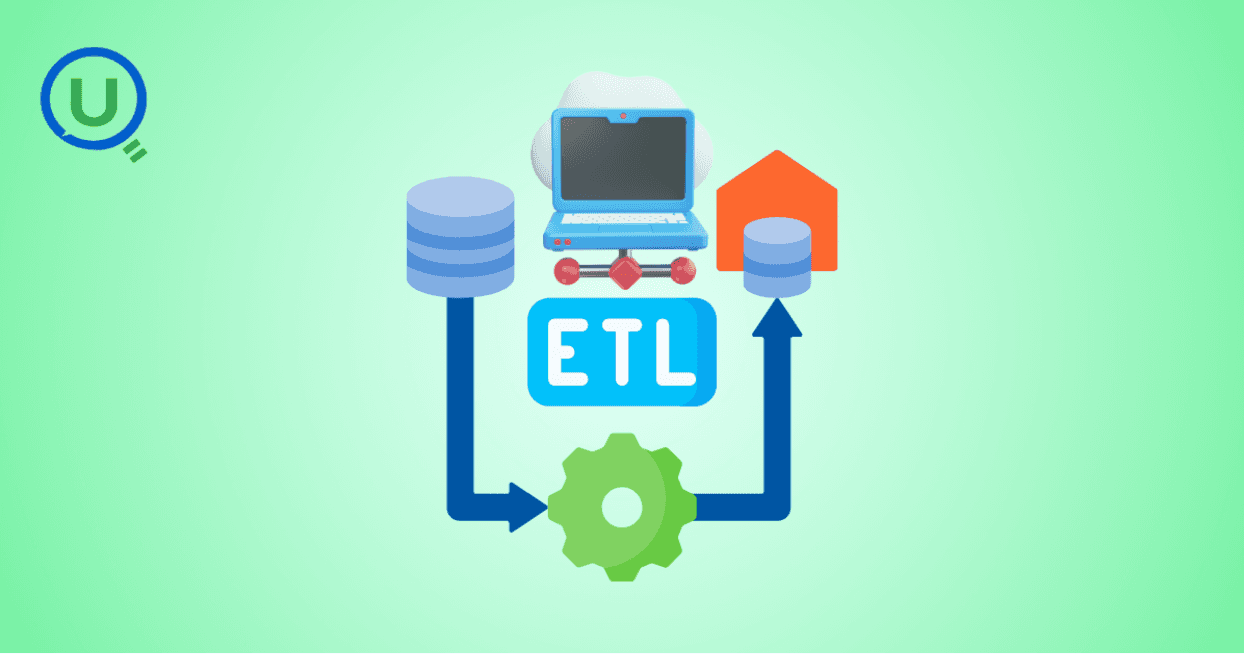
Learn the essential role of ETL (Extract, Transform, Load) in data engineering. Understand the three phases of ETL, its benefits, and how to implement effective ETL pipelines using modern tools and strategies for better decision-making, scalability, and data quality.

Discover why data orchestration and analysis are essential for modern data systems. Learn how automation tools streamline data workflows, boost insights, and scale with your business
Learn what a data ingestion pipeline is, why it's vital for modern analytics, and how to design scalable, real-time pipelines to power your data systems effectively.

Discover the top 15 data warehouse tools for scalable data management in 2024. Learn how to choose the right platform for analytics, performance, and cost-efficiency.
Confused between a data mart and a data warehouse? Learn the key differences, use cases, and how to choose the right data architecture for your business. Explore best practices, real-world examples, and expert insights from Enqurious.

Discover the top 10 predictive analytics tools to know in 2025—from SAS and Google Vertex AI to RapidMiner and H2O.ai. Learn why predictive analytics is essential for modern businesses and how to choose the right tool for your data strategy.

Explore the key differences between descriptive and predictive analytics, and learn how both can drive smarter decision-making. Discover how these analytics complement each other to enhance business strategies and improve outcomes in 2025 and beyond.

Explore the key differences between predictive and prescriptive analytics, and learn how both can drive smarter decisions, enhance agility, and improve business outcomes. Discover real-world applications and why mastering both analytics approaches is essential for success in 2025 and beyond.

Compare PostgreSQL vs SQL Server in this comprehensive guide. Learn the key differences, strengths, and use cases to help you choose the right database for your business needs, from cost to performance and security.

Learn what Power BI is and how it works in this beginner's guide. Discover its key features, components, benefits, and real-world applications, and how it empowers businesses to make data-driven decisions.

Explore what a Business Intelligence Engineer does—from building data pipelines to crafting dashboards. Learn key responsibilities, tools, and why this role is vital in a data-driven organization.
Discover why data lineage is essential in today’s complex data ecosystems. Learn how it boosts trust, compliance, and decision-making — and how Enqurious helps you trace, govern, and optimize your data journeys.

Learn what a data mart is, its types, and key benefits. Discover how data marts empower departments with faster, targeted data access for improved decision-making, and how they differ from data warehouses and data lakes.

Master data strategy: Understand data mart vs data warehouse key differences, benefits, and use cases in business intelligence. Enqurious boosts your Data+AI team's potential with data-driven upskilling.
Learn what Azure Data Factory (ADF) is, how it works, and why it’s essential for modern data integration, AI, and analytics. This complete guide covers ADF’s features, real-world use cases, and how it empowers businesses to streamline data pipelines. Start your journey with Azure Data Factory today!
Discover the key differences between SQL and MySQL in this comprehensive guide. Learn about their purpose, usage, compatibility, and how they work together to manage data. Start your journey with SQL and MySQL today with expert-led guidance from Enqurious!
Learn Power BI from scratch in 2025 with this step-by-step guide. Explore resources, tips, and common mistakes to avoid as you master data visualization, DAX, and dashboard creation. Start your learning journey today with Enqurious and gain hands-on training from experts!

AI tools like ChatGPT are transforming clinical data management by automating data entry, enabling natural language queries, detecting errors, and simplifying regulatory compliance. Learn how AI is enhancing efficiency, accuracy, and security in healthcare data handling.
Big Data refers to large, complex data sets generated at high speed from various sources. It plays a crucial role in business, healthcare, finance, education, and more, enabling better decision-making, predictive analytics, and innovation.

Discover the power of prompt engineering and how it enhances AI interactions. Learn the key principles, real-world use cases, and best practices for crafting effective prompts to get accurate, creative, and tailored results from AI tools like ChatGPT, Google Gemini, and Claude.

Learn what a Logical Data Model (LDM) is, its key components, and why it’s essential for effective database design. Explore how an LDM helps businesses align data needs with IT implementation, reducing errors and improving scalability.

Discover the power of a Canonical Data Model (CDM) for businesses facing complex data integration challenges. Learn how CDM simplifies communication between systems, improves data consistency, reduces development costs, and enhances scalability for better decision-making.

Discover the 10 essential benefits of Engineering Data Management (EDM) and how it helps businesses streamline workflows, improve collaboration, ensure security, and make smarter decisions with technical data.

Explore how vibe coding is transforming programming by blending creativity, collaboration, and technology to create a more enjoyable, productive, and human-centered coding experience.

Learn how Azure Databricks empowers data engineers to build optimized, scalable, and reliable data pipelines with features like Delta Lake, auto-scaling, automation, and seamless collaboration.

Explore the top 10 data science trends to watch out for in 2025. From generative AI to automated machine learning, discover how these advancements are shaping the future of data science and transforming industries worldwide.

Discover the key differences between data scientists and data engineers, their roles, responsibilities, and tools. Learn how Enqurious helps you build skills in both fields with hands-on, industry-relevant learning.

Discover the 9 essential steps to effective engineering data management. Learn how to streamline workflows, improve collaboration, and ensure data integrity across engineering teams.
Azure Databricks is a cloud-based data analytics platform that combines the power of Apache Spark with the scalability, security, and ease of use offered by Microsoft Azure. It provides a unified workspace where data engineers, data scientists, analysts, and business users can collaborate.

In today's data-driven world, knowing how to make sense of information is a crucial skill. We’re surrounded by test scores, app usage stats, survey responses, and sales figures — and all this raw data on its own isn’t helpful.

In this blog, we will discuss some of the fundamental differences between AI inference vs. training—one that is, by design, artificially intelligent.

This guide provides a clear, actionable roadmap to help you avoid common pitfalls and successfully earn your SnowPro Core Certification, whether you’re making a career pivot or leveling up in your current role.

"Ever had one of those days when you’re standing in line at a store, waiting for a sales assistant to help you find a product?" In this blog we will get to know about -What is RAG, different types of RAG Architectures and pros and cons for each RAG.

Discover how Databricks and Snowflake together empower businesses by uniting big data, AI, and analytics excellence

How do major retailers like Walmart handle thousands of customer queries in real time without breaking a sweat? From answering questions instantly to providing personalized shopping recommendations, conversational AI reshapes how retailers interact with their customers.